How to Plan a Group Trip When Everyone Has a Different Budget
A practical guide to choosing a destination, setting a fair budget and planning a holiday that works for everyone.
By Wanderfox Team · 2026-11-01 · 8 min read
How to Plan a Group Trip When Everyone Has a Different Budget
Planning a holiday with friends is exciting — until everyone starts discussing money.
One person is happy to spend €2,000 on a week away. Another wants to keep the entire trip under €700. Someone prefers boutique hotels, while someone else is perfectly happy with a budget apartment.
The challenge isn't simply finding a cheap destination. It's finding a holiday that everyone can enjoy without making anyone feel pressured to spend more than they're comfortable with.
The good news is that you don't need everyone to have exactly the same budget to plan a great group trip. You need a fair way to make decisions, understand the trade-offs and organise shared costs.
Here's how to do it.
1. Find everyone's comfortable budget first
Before choosing a destination, ask everyone what they're comfortable spending.
Don't ask people how much they can spend. Ask how much they would genuinely like to spend.
These are not always the same thing.
For example, imagine four friends planning a five-day European holiday:
| Traveller | Comfortable budget |
|---|---|
| Alex | €700 |
| Sam | €900 |
| Jamie | €1,200 |
| Taylor | €1,500 |
The group doesn't need to force everyone into a €1,500 holiday or automatically choose the cheapest possible option.
Instead, agree on a target budget that most people are comfortable with, and identify which expenses are flexible.
A useful starting point is to separate:
- Flights or transport
- Accommodation
- Food and drinks
- Activities and sightseeing
- Local transport
- A small contingency
This makes it easier to understand where the money will go.
2. Choose a destination that fits the group
A destination can look affordable until you include flights, accommodation and local transport.
Compare your shortlisted destinations using the total estimated cost rather than just the price of a flight or hotel.
For example:
| Cost consideration | Destination A | Destination B |
|---|---|---|
| Flights | €180 | €90 |
| Accommodation per person | €280 | €350 |
| Food and local transport | €160 | €200 |
| Activities | €100 | €120 |
| Estimated total | €720 | €760 |
Destination B has cheaper flights, but the overall holiday is more expensive.
Also consider:
- How easy it is for everyone to get there
- Whether accommodation is affordable for the group size
- Whether there are free or low-cost activities
- Whether the weather suits your travel dates
- Whether everyone can find something they enjoy doing
Don't choose a destination just because one person has always wanted to visit it. The best choice is one that works for the group as a whole.
!Friends planning a group holiday together using a travel map.

3. Agree on the shared expenses — and the individual ones
One of the easiest ways to avoid disagreements is to decide what the group will share and what everyone will pay for individually.
Usually shared:
- Accommodation
- Airport transfers
- Groceries for the apartment
- Shared taxis
- Group activities
Usually individual:
- Flights from different departure cities
- Personal shopping
- Optional premium experiences
- Drinks or meals when people choose different things
Not every expense needs to be divided equally.
For example, if three friends share a €300 apartment for three nights, splitting it equally makes sense if everyone stays for the same period. But if one person arrives a day later, a different split might be fairer.
Agree on the rules before booking rather than trying to settle disagreements afterwards.
4. Don't let the accommodation decision derail the trip
Accommodation is often one of the biggest sources of disagreement.
Some people want a central hotel. Others prefer an apartment with a kitchen. Some are happy sharing rooms, while others want their own space.
Instead of debating individual properties immediately, agree on the essentials:
- Maximum accommodation budget per person
- Preferred location
- Number of bedrooms
- Private or shared bathrooms
- Hotel versus apartment
- Distance from public transport
Then shortlist two or three options that meet those requirements.
A slightly less central apartment might save the group enough money to enjoy better restaurants or activities during the trip.
5. Plan activities with different spending levels
A group holiday doesn't mean everyone has to spend money on every activity.
Plan a mix of experiences:
Free or inexpensive
- Walking tours
- Beaches and viewpoints
- Parks and gardens
- Exploring neighbourhoods
- Local markets
Moderate spending
- Museums
- Food tours
- Boat trips
- Local experiences
Premium experiences
- Fine dining
- Private tours
- Special excursions
- Exclusive activities
The important thing is to make optional activities genuinely optional.
For example, three people might book a €60 wine tour while another person spends the afternoon exploring the city. Everyone can still meet for dinner afterwards.
This makes the holiday more flexible without splitting the group into completely separate trips.
6. Build an itinerary that doesn't waste time or money
A poorly planned itinerary can increase costs.
Travelling back and forth across a city means more taxi fares, more public transport and less time enjoying the destination.
Instead, group activities by neighbourhood and plan a sensible order for each day.
A good daily plan should include:
- Two or three main activities
- Meals close to where you'll be
- Realistic travel times between places
- Enough time for breaks
- Optional activities for different interests
For multi-city trips, remember to account for travel days. Moving hotels every night can make a holiday more expensive and exhausting.
!Friends comparing destinations and planning a travel itinerary on a map.
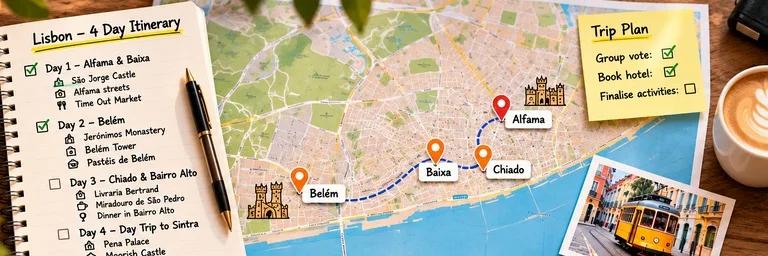
A mapped, timed itinerary helps everyone understand what the group is actually planning to do, rather than just collecting a long list of places.
7. Keep track of shared expenses during the trip
Don't wait until you get home to work out who owes whom.
Keep a record of:
- Who paid
- How much was paid
- Who the expense should be split between
- Whether someone has paid their share back
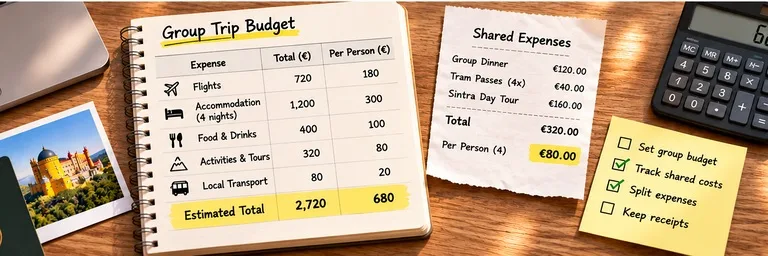
For example, if Jamie pays €120 for a group dinner and four people share the cost equally, each person owes €30.
If Sam pays €80 for a taxi shared by only two people, that should be recorded separately.
The aim is to avoid one person carrying all the costs and having to chase everyone later.
!setting a shared travel budget and splitting expenses
8. Give everyone a say in the plan
A group holiday works best when everyone feels involved.
One person can take responsibility for organising the trip, but everyone should be able to:
- Suggest destinations and activities
- See the itinerary
- Vote on proposed changes
- Review bookings
- Understand the shared expenses
This is particularly useful when the group has different priorities.
You don't have to agree on every activity. You just need a transparent way to make decisions.
Plan your next group holiday together
Planning a holiday with different budgets and preferences doesn't have to mean endless spreadsheets and group chat messages.
Wanderfox brings your group itinerary, AI travel assistant, proposed changes and voting, bookings and shared expenses together in one trip. You can start with an AI-generated itinerary, invite friends, discuss changes and approve the ones the group agrees on.
Everyone can see the same plan, while the trip owner keeps control of the final decisions.
Start planning your next group holiday with Wanderfox.
Frequently asked questions
How do you plan a group trip when everyone has a different budget?
Start by understanding each person's comfortable spending range. Agree on a shared target budget, separate shared expenses from optional personal spending, and choose a destination that offers flexibility.
Should everyone pay equally on a group trip?
Not necessarily. Shared expenses such as accommodation can be divided equally when everyone receives the same benefit. Individual flights, optional activities and different-length stays may need separate calculations.
How do you choose a destination for a group holiday?
Compare destinations based on total travel costs, accommodation, weather, transport, activities and accessibility. Shortlist a few options and let everyone have a say before making the decision.
How do you avoid arguments about money when travelling with friends?
Agree on the budget and expense-splitting rules before travelling. Record shared expenses as they happen, make optional activities clear and avoid assuming everyone has the same spending preferences.
What is the best way to organise a group holiday?
Use one shared place for the itinerary, bookings, decisions and expenses. Make sure everyone can see the latest plan and has a clear way to suggest or vote on changes.
A great group holiday isn't about everyone spending the same amount. It's about agreeing on what matters, being transparent about costs and making sure everyone gets to enjoy the experience.
Ready to plan your next holiday with friends? Create a shared itinerary with Wanderfox.
Plan this trip with Wanderfox AI · More travel guides